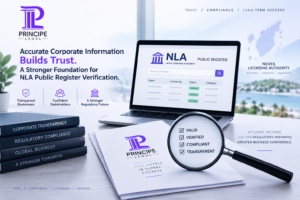
For businesses operating under the Neves Licensing Authority (NLA) framework, maintaining accurate corporate information is an important part of regulatory transparency and ongoing compliance. Corporate details are not only used during the licensing process but can also support public verification, regulatory oversight, and confidence among clients, partners, and other stakeholders.
NLA Public Register Verification provides a practical way to confirm licensing information and establish whether a business is properly represented within the relevant regulatory framework. For this reason, businesses should ensure that their corporate information remains complete, accurate, and consistent with their official records.
What Is NLA Public Register Verification?
NLA Public Register Verification refers to checking publicly available licensing information associated with a business under the Neves Licensing Authority framework. A public register can help stakeholders verify relevant information about licensed entities and understand their regulatory status.
For businesses, this means that the information connected with their licensing profile should accurately reflect their current corporate position. Differences between official records, licensing information, and publicly available details can create unnecessary questions and may require clarification.
Accurate information therefore supports both transparency and regulatory confidence.
Why Accurate Corporate Information Is Important
Corporate information can include details such as the legal entity name, business activities, ownership information, registered details, directors or responsible persons, and other information relevant to the applicable licensing framework.
Keeping these details accurate is important for several reasons.
1. Supports Regulatory Transparency
Transparency is a fundamental part of responsible business operations. When corporate information is accurate, regulators and stakeholders can better understand the identity and structure of an organization.
For businesses associated with the Neves Licensing Authority, accurate information helps create a clearer picture of the licensed entity. This can make regulatory verification more straightforward and reduce confusion caused by outdated or inconsistent information.
2. Helps Stakeholders Verify Business Information
Clients, business partners, financial institutions, and other stakeholders may want to confirm that an entity’s licensing information is legitimate and current.
NLA Public Register Verification can provide an additional reference point for this process. If a company’s public information corresponds with its official corporate documentation, stakeholders may find it easier to understand the organization’s regulatory position.
Accurate information can therefore contribute to greater business credibility.
3. Reduces the Risk of Inconsistencies
Corporate structures can change over time. A company may update its legal name, ownership structure, directors, registered information, or business activities.
If these changes are not properly reflected across relevant records, inconsistencies can appear. For example, an outdated company name in one record and a current name in another may create unnecessary verification questions.
Regularly reviewing corporate information helps businesses identify these discrepancies before they become more significant compliance issues.
Corporate Changes Should Be Properly Managed
Maintaining accurate information is not a one-time responsibility. Businesses should review their corporate information whenever significant changes occur.
Changes that may require attention can include:
- Changes in directors or authorized representatives
- Changes in beneficial ownership
- Changes to the legal entity name
- Changes in registered corporate information
- Changes in business activities
- Changes to organizational or governance structures
The appropriate reporting or notification requirements will depend on the applicable NLA framework and the nature of the change. Businesses should therefore maintain proper internal records and seek appropriate professional guidance when necessary.
How Businesses Can Maintain Accurate NLA Information
A structured approach can make corporate information management more effective.
Conduct Regular Information Reviews
Businesses should periodically compare their corporate records with relevant licensing information. This can help identify outdated details before they affect verification.
Maintain Consistent Documentation
Corporate documents, licensing records, internal registers, and other relevant information should be kept consistent wherever applicable. Proper document management can make it easier to demonstrate the current status of the business.
Monitor Ownership and Governance Changes
Ownership and governance information can be particularly important for regulatory transparency. Businesses should maintain appropriate records when directors, shareholders, beneficial owners, or other responsible persons change.
Address Errors Promptly
If inaccurate or outdated information is identified, businesses should determine the appropriate process for correcting it. Prompt action can help prevent minor administrative discrepancies from becoming larger compliance concerns.
The Role of Legal and Corporate Support
Managing corporate information can become more complex as a business expands across jurisdictions or operates through multiple entities. Professional legal and corporate support can help businesses organize records, review corporate structures, and identify areas that may require updating.
For businesses working with the Neves Licensing Authority, a registered agent or professional adviser may also assist with administrative coordination and documentation, depending on the services provided and the requirements applicable to the business.
The objective is not simply to maintain paperwork. It is to establish a reliable corporate information system that supports transparency and ongoing regulatory readiness.
Conclusion
Accurate corporate information plays an important role in NLA Public Register Verification and broader regulatory transparency. Businesses should ensure that their legal identity, ownership information, governance details, and other relevant corporate records remain accurate and properly maintained.
For entities operating under the Neves Licensing Authority, keeping information current can make verification easier, reduce inconsistencies, and support confidence among regulators and business stakeholders.
Regular reviews, consistent documentation, timely updates, and appropriate professional support can help businesses maintain reliable corporate records over the long term. Ultimately, accurate information is not just an administrative requirement—it is an important part of maintaining a transparent and well-organized business under the NLA framework.